
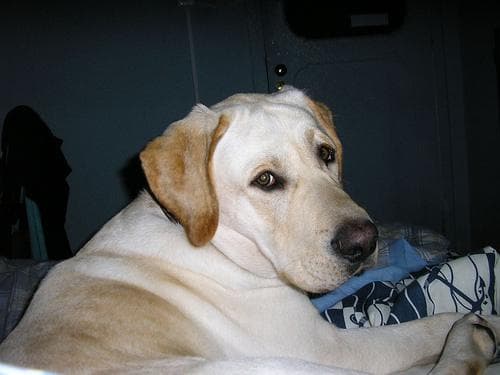
The silent canine epidemic
Studies across the UK and Europe estimate that 25-40% of pet dogs are overweight or obese. Most owners do not realise — or have come to see it as normal. Excess weight is not just aesthetic; it cuts life expectancy by 1-3 years and raises the risk of diabetes, osteoarthritis, heart and respiratory problems, and several cancers.
How to score your dog at home
The Body Condition Score (BCS) is the most useful tool. Vets score on a 1-9 scale:
| BCS | Description | What you should see / feel |
|---|---|---|
| 1-3 | Underweight to emaciated | Ribs and vertebrae visible from a distance |
| 4-5 | Ideal | Ribs palpable with light pressure, clear waist behind the ribs |
| 6-7 | Overweight | Ribs hard to feel, no defined waist |
| 8-9 | Obese | Ribs not palpable, visible fat pads on lower back and base of tail |
Common causes
- Overfeeding — by far the most common: oversized portions, unchecked treats, leftovers from the dinner table.
- Inactivity — too little exercise, especially in dogs left alone all day.
- Neutering / spaying — reduces basal metabolism by 20-30%; the ration should drop accordingly.
- Age — older dogs need fewer calories.
- Medical causes — hypothyroidism or Cushing’s syndrome. Rare, but worth ruling out if a dog gains weight with no obvious explanation.
How to help your dog lose weight
1. See the vet first
Before any weight-loss plan, the vet should:
- Confirm the degree of overweight and set a target weight
- Rule out medical causes
- Calculate the calorie budget for safe weight loss
2. Calculate real calories
The amount printed on the bag is a guideline for the average adult. An overweight dog should be fed for their target weight, not their current weight. Weigh the food — do not measure by volume.
3. Choose the right food
Weight-control diets contain more fibre (helps satiety), less fat and fewer calories per gram. They are the safest option for obese dogs. Do not simply give less of a standard food without veterinary advice — your dog could end up nutritionally deficient.
4. Get treats under control
Treats can quietly account for 20-30% of daily calories. Low-calorie alternatives: raw carrot, cucumber, plain cooked green beans (no salt). Subtract treat calories from the daily food ration.
5. Build up the exercise
Start with longer or brisker walks. For very obese dogs or those with arthritis, swimming or canine hydrotherapy is ideal — no joint impact. Increase exercise weekly, not all at once.
How to track progress
Weigh in at the vet every 2-4 weeks. The goal is 1-2% of body weight per week. If there has been no change after 3-4 weeks, reduce the ration by another 10%. If they lose too fast, ease back up slightly.
How CanAI helps
Log weigh-ins on your dog’s health page. CanAI tracks the trend over time and warns you if weight creeps back up — the most common failure point of any diet.